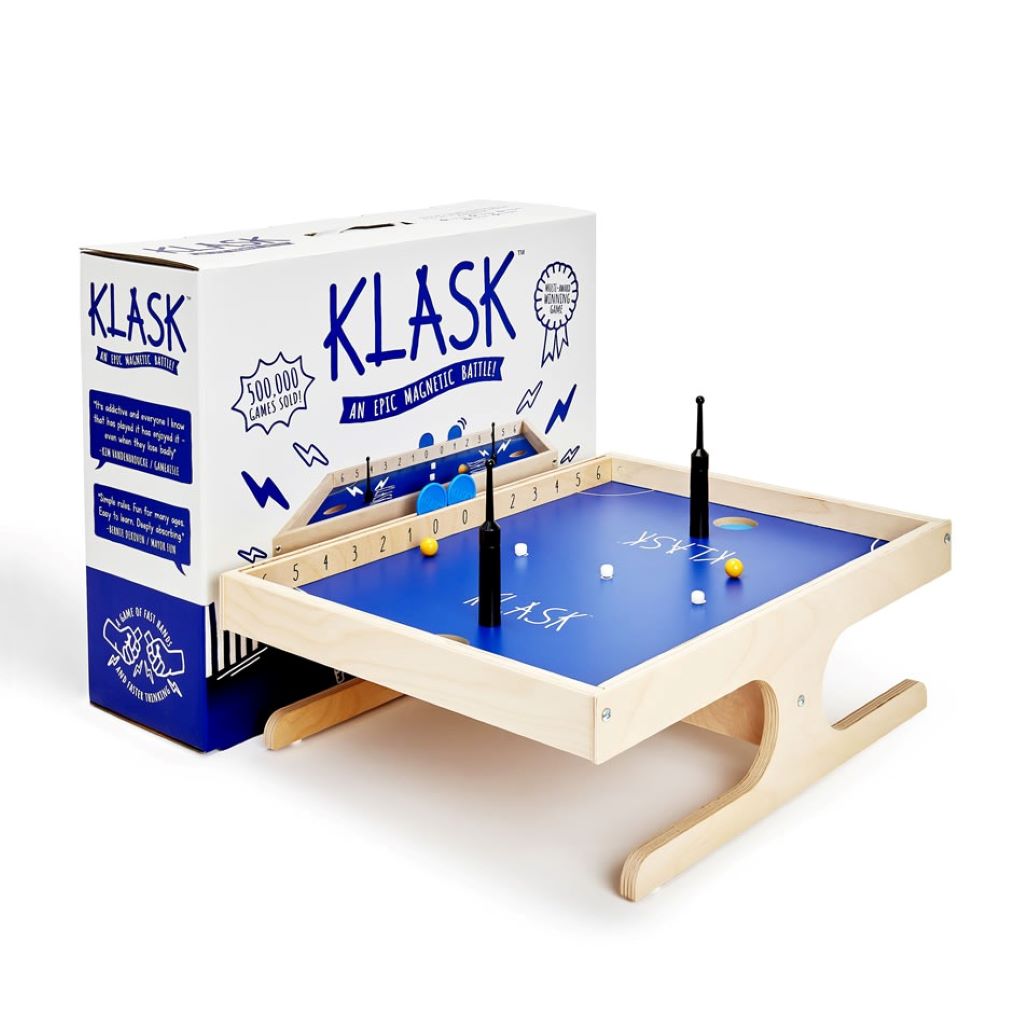
Klask has become one of the most popular tabletop games worldwide. This fast-paced magnetic game combines elements of air hockey, foosball, and strategic positioning. However, one element frustrates even experienced players: the dreaded white magnets that can instantly end your rally.
Avoiding the three white magnetic obstacles requires skill, awareness, and strategic movement patterns. This comprehensive guide reveals proven techniques for keeping your striker away from these game-ending hazards while maintaining offensive pressure.
Understanding the White Magnet Challenge
The white magnets, also called biscuits, serve as neutral obstacles in the playing field. These three small magnetic pieces attract to any striker that comes too close. Once two white magnets attach to your striker, you automatically lose the point.
The magnets create strategic complexity beyond simple offensive play. Players must balance attacking the ball with defensive positioning. Additionally, the magnets force players to use the entire playing surface rather than relying on single attack patterns.
White magnets move freely across the board during gameplay. Your opponent’s movements can push magnets toward your striker unexpectedly. Therefore, constant awareness of magnet positions becomes essential for consistent success.
Mastering Controlled Speed and Momentum
Speed control separates novice players from experienced competitors. Moving your striker too quickly reduces reaction time when approaching white magnets. Slower, deliberate movements provide better control and positioning options.
Practice smooth acceleration rather than jerky movements. Sudden speed changes cause your striker to slide unpredictably. This unpredictability increases collision risk with nearby white magnets. Moreover, smooth movements keep the ball under better control.
Reduce speed when entering congested areas of the board. The center zone typically contains more white magnets after several exchanges. Slowing down gives you time to navigate between obstacles safely. However, maintain enough momentum to respond quickly to the ball’s position.
Learn to stop your striker completely when necessary. Emergency stops prevent momentum from carrying you into white magnets. Practice stopping techniques during warmup rounds to build muscle memory. Additionally, knowing your stopping distance at various speeds improves decision-making during intense rallies.
Developing Spatial Awareness Skills
Peripheral vision monitoring keeps you aware of all three white magnets simultaneously. Focus primarily on the ball while maintaining awareness of magnet positions. This divided attention becomes natural with practice and experience.
Create mental maps of the board layout during play. Note where magnets cluster and which areas remain clear. Update this mental map continuously as magnets shift positions. Therefore, you’ll automatically know safe zones without looking directly at them.
Anticipate how your movements affect magnet positions. Your striker pushes magnets away as you move past them. Understanding this physics helps you clear paths before attacking. Moreover, you can strategically push magnets toward your opponent’s side.
Watch for magnet movement patterns during opponent attacks. White magnets often shift toward defensive positions during exchanges. Predicting these movements prevents surprises when you regain control. Additionally, recognizing patterns helps you exploit cleared spaces quickly.
Using Defensive Positioning Techniques
Maintain distance from the center during defensive situations. White magnets congregate centrally due to gameplay dynamics. Positioning your striker along the edges provides safer defensive options. However, stay close enough to reach attacking opportunities.
Create buffer zones between your striker and visible magnets. Aim for at least two centimeter clearance when passing near white magnets. This safety margin accounts for slight control errors and unexpected movements. Additionally, larger buffers provide more reaction time.
Position yourself in magnet-free corners when under pressure. The corner areas often contain fewer obstacles after balls clear them. Retreat to these safe zones when your opponent controls the ball. Moreover, corner positioning provides better angles for counterattacks.
Use your opponent’s striker as a reference point. If their striker pushes magnets toward you, adjust positioning preemptively. Reading opponent movements prevents defensive scrambling that causes magnet collisions. Therefore, proactive positioning beats reactive responses.
According to The New York Times, Klask’s simple rules combined with complex strategy make it an engaging game for players of all skill levels.
Implementing Strategic Movement Patterns
Develop consistent attack patterns that naturally avoid white magnets. Curving approaches rather than straight-line attacks create safer paths. Arc-shaped movements provide more navigation options around obstacles. Additionally, curved paths make your attacks less predictable.
Practice figure-eight movement drills during training sessions. This pattern teaches smooth directional changes while avoiding stationary points. Figure-eight movements keep magnets away through constant motion. Moreover, this drill builds the muscle memory needed during actual games.
Use the board’s edges for high-speed movements. Edge running minimizes white magnet encounters since obstacles rarely accumulate there. However, maintain awareness of corner magnets that occasionally settle in edge zones.
Incorporate circular holding patterns while waiting for opportunities. Circling in cleared areas keeps your striker moving safely. Static positioning allows white magnets to drift toward you. Therefore, constant motion in safe zones provides better readiness.

Perfecting Ball Control to Reduce Magnet Risk
Superior ball control eliminates desperate movements that cause magnet collisions. Catching and controlling the ball reduces chaotic scrambling. Controlled possession lets you survey magnet positions before moving.
Practice soft touches that keep the ball close to your striker. Hard hits send the ball bouncing unpredictably across magnets. Gentle guidance maintains control while navigating obstacles. Additionally, soft touches prevent the ball from pushing magnets into your path.
Learn to trap the ball against the board edge. Edge trapping provides stable possession in relatively safe zones. This technique gives you time to plan magnet-avoiding attack routes. However, avoid holding too long, as skilled opponents will pressure you.
Develop one-touch redirect skills for quick responses. Sometimes controlling the ball fully risks magnet collision during the setup. One-touch redirects keep play flowing while minimizing exposure time. Moreover, quick redirects give opponents less time to push magnets toward you.
Reading Opponent Behavior for Magnet Advantages
Observe how opponents move magnets unintentionally during their attacks. Aggressive players often push magnets toward their own defensive zone. Recognizing these patterns helps you predict clear attacking lanes. Therefore, patient players can exploit opponent-created openings.
Notice if opponents struggle with specific magnet configurations. Some players consistently fail when magnets cluster in certain areas. Strategically pushing magnets into these zones creates advantages. Additionally, this psychological pressure causes mistakes.
Watch for opponent panic movements near magnets. Players who fear magnets make predictable avoidance patterns. Anticipating these reactions lets you position for counterattacks. Moreover, pressuring opponents near magnets forces errors.
Identify whether opponents prioritize offense over magnet avoidance. Overly aggressive players ignore white magnets while attacking. Defensive play that pushes magnets into their attack paths frustrates this style. However, don’t become too defensive, as this surrenders offensive opportunities.
Training Drills for Magnet Avoidance
Practice solo drills focusing exclusively on magnet navigation. Set up specific magnet configurations and navigate through them repeatedly. This focused practice builds confidence in tight situations. Additionally, solo training lets you experiment without competitive pressure.
Create obstacle courses using the white magnets in challenging patterns. Navigate your striker through increasingly difficult configurations. Time yourself to add pressure similar to actual games. Moreover, this drill reveals your personal weak points.
Play practice games where you intentionally leave the ball stationary. Focus entirely on keeping your striker away from magnets while maintaining good position. This drill isolates magnet awareness from ball-tracking skills. Therefore, you develop each skill component separately.
Record your games to analyze magnet collision patterns. Reviewing footage reveals unconscious habits causing problems. Most players have consistent magnet avoidance weaknesses they don’t notice during play. Additionally, video analysis shows improvement over time.
According to research from Wired, games requiring physical dexterity and strategy like Klask provide unique cognitive benefits compared to purely strategic board games.
Maintaining Mental Focus During Long Games
Fatigue causes mental lapses that increase magnet collisions. Stay hydrated and take breaks between intense matches. Physical tiredness affects hand-eye coordination and spatial awareness. Therefore, managing energy levels maintains consistent performance.
Develop pre-shot routines that include magnet position checks. Consistent routines prevent rushing into moves without proper awareness. Brief pauses for assessment reduce impulsive errors. However, keep routines quick to maintain game flow.
Practice mindfulness techniques to maintain present-moment awareness. Thinking about previous points or future outcomes diverts attention from current magnet positions. Staying present keeps your focus where it belongs. Additionally, mindfulness reduces anxiety-driven mistakes.
Reset mentally after magnet collisions instead of dwelling on errors. Frustration compounds mistakes by disrupting concentration. Accept collisions as learning opportunities and refocus immediately. Moreover, emotional control prevents tilt that leads to more collisions.
Adapting to Different Playing Surfaces
Board condition significantly affects magnet behavior and striker control. New boards provide smoother surfaces with more predictable movements. Older boards may have worn areas affecting striker glide. Therefore, adjust your speed and movements based on surface conditions.
Test the board before competitive play begins. Roll your striker across different areas to assess friction levels. Notice how white magnets move on the specific surface. This preparation prevents surprises during actual gameplay.
Compensate for sticky spots that can trap your striker near magnets. Worn areas sometimes create friction that slows movements unexpectedly. Knowing these locations helps you avoid getting stuck in dangerous positions. Additionally, you can use sticky spots strategically to stop precisely.
Adjust strategies for tournament boards versus home boards. Tournament boards receive regular maintenance and replacement. Home boards develop unique characteristics over time. Moreover, adapting quickly to different surfaces demonstrates advanced skill.
Conclusion
Avoiding white magnets in Klask consistently requires mastering multiple interconnected skills. Speed control, spatial awareness, and strategic positioning form the foundation of magnet avoidance. Additionally, proper ball control reduces desperate movements that cause collisions. Regular practice drills build muscle memory for navigating around obstacles naturally. Mental focus and surface adaptation complete the skill set needed for consistent success. Therefore, players who dedicate time to developing these techniques will dramatically reduce magnet-related losses. Remember that even professional players occasionally attract magnets, so focus on consistent improvement rather than perfection. With practice and attention to these principles, you’ll spend less time losing points to white magnets and more time scoring goals.
Frequently Asked Questions
What happens if I get two white magnets stuck to my striker in Klask?
When two white magnets attach to your striker, you immediately lose the current point. Your opponent scores regardless of the ball’s position. The round ends instantly, pieces are reset, and play resumes with a new serve.
Is there a legal way to intentionally push white magnets toward my opponent?
Yes, strategically pushing white magnets toward your opponent is a legitimate advanced technique. However, you cannot touch magnets with your striker solely for this purpose. Incidental pushing during normal play and ball pursuit remains legal and tactical.
How close can I safely get to white magnets without them sticking?
Maintain approximately two centimeters clearance for safe passage near white magnets. The magnetic attraction increases dramatically within one centimeter. Individual board variations and magnet strength differences may require adjusting this distance through testing.
Do white magnets move differently on new versus old Klask boards?
Yes, white magnets glide more freely on new boards with smooth surfaces. Older boards develop worn areas where magnets may stick or move unpredictably. Additionally, humidity and temperature affect board surfaces, changing magnet movement characteristics.
Should I play more defensively to avoid white magnets?
Balance remains essential. Overly defensive play avoids magnets but surrenders offensive opportunities. The best strategy combines aggressive attacks through cleared areas with defensive retreats to safe zones. Therefore, adapt your risk level based on current magnet positions and score.
Related Topics:
Kingshot Hero Tier List: Ultimate 2025 Guide
Hollow Knight Walkthrough: A Tale of Bugs and Bravery