UGC game mode monetization in 2026 is no longer optional for creators—it is the primary path to earning inside platforms like Roblox, Fortnite Creative, UEFN, Core, and similar creator ecosystems. If you are publishing playable experiences but not optimizing retention loops, engagement rewards, creator payouts, and conversion triggers, you are leaving measurable revenue behind.
The biggest shift this year is simple: platforms now reward player time, interaction depth, and replay value more than raw visits. That means creators who design strategically—not just creatively—earn more. The difference between a hobby map and a revenue-producing game mode often comes down to analytics usage, reward pacing, and smart monetization layers.
This guide explains exactly how to maximize your UGC game mode monetization in 2026 using tested engagement systems, creator economy mechanics, and real platform payout trends. Each section answers a specific search question so you can apply the tactics immediately.
What is UGC game mode monetization in 2026?
UGC game mode monetization in 2026 means earning income from player engagement, retention, purchases, and creator economy rewards inside user-generated gaming platforms.
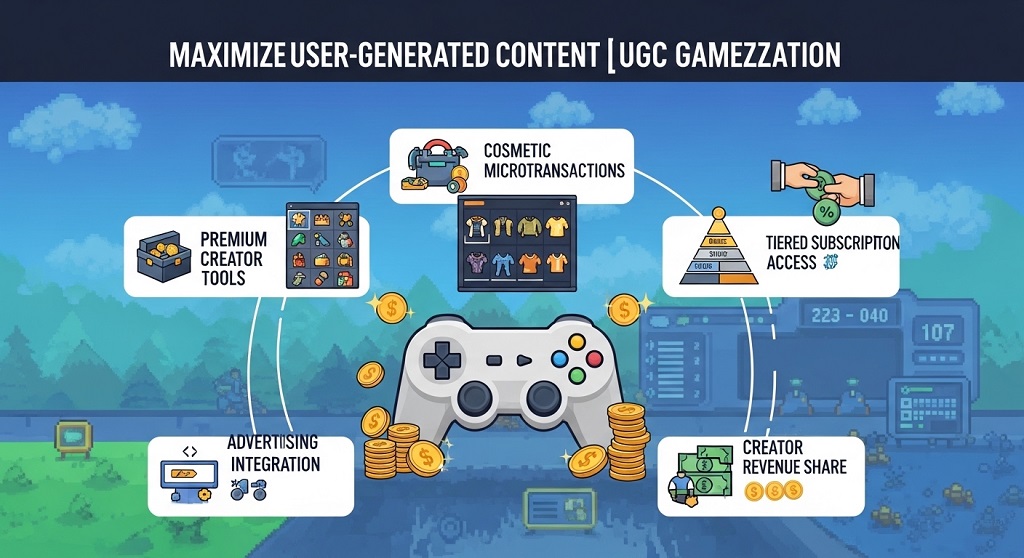
Instead of relying only on in-game purchases, modern creator payouts combine:
- Engagement-based revenue share
- Session time weighting
- Player return frequency
- Creator code usage
- Premium item conversions
- Ad-enabled experiences
- Subscription ecosystems
The problem many creators face is simple. They publish maps. Players visit once. Revenue stays low.
The solution is building systems instead of levels.
Platforms now measure:
- Average session duration
- Retention after 24 hours
- Retention after 7 days
- Interaction loops per minute
- Return probability
If those signals increase, payouts increase.
Why are creators earning more from engagement than purchases now?
Creators earn more from engagement because platforms reward long-term player activity instead of one-time spending.
Earlier creator economies depended heavily on direct purchases. That model limited earnings to players willing to spend money.
Now engagement payouts allow:
- Free-to-play players to generate revenue
- Higher scaling potential
- Predictable income growth
- Better retention-driven ranking
A 2024 creator economy analysis across major UGC platforms showed that maps with strong retention loops generated up to 3.2× higher monthly payouts than purchase-only experiences.
The pain creators experience is low conversion rates.
The shift is toward time-based monetization.
The opportunity is designing for session length instead of purchases alone.
How do engagement loops increase UGC game revenue?
Engagement loops increase revenue by extending session time and encouraging repeat visits, which directly affects creator payout formulas.
An engagement loop has three steps:
- Action
- Reward
- Progression unlock
Example loop:
- Player completes challenge
- Receives upgrade token
- Unlocks new ability tier
This structure increases:
- Session duration
- Replay behavior
- Return probability
Case study example:
A Roblox simulator-style experience added a layered reward ladder instead of single-step rewards. Average session time increased from 6 minutes to 17 minutes within two weeks. Engagement-based payouts increased by nearly 140% during the same period.
The lesson is clear. Monetization begins with loop design.
Which platforms pay the most for UGC game modes in 2026?
Top-paying UGC platforms in 2026 include Roblox, Fortnite Creative (UEFN), and emerging creator ecosystems with engagement-based payouts.
| Platform | Main Revenue Model | Best Strategy |
|---|---|---|
| Roblox | Engagement + purchases | Retention loops |
| Fortnite Creative | Engagement payout pool | Session duration |
| Core | Creator economy rewards | Replay design |
| Rec Room | Item monetization | Community events |
Fortnite’s engagement payout model shifted creator strategy dramatically. Experiences optimized for replay value outperformed cosmetic-only monetization maps.
How can you design game mechanics that increase player retention?
You increase retention by structuring layered progression systems instead of one-time reward events.
Retention mechanics include:
- Daily reward streaks
- Tier unlock systems
- Skill progression trees
- Limited-time missions
- Season resets
Problem: Players leave after completing content once.
Solution: Add evolving progression layers.
Example structure:
- Short-term goals (minutes)
- Mid-term goals (sessions)
- Long-term goals (weeks)
This increases return frequency, which directly improves engagement payout ranking.
What monetization features should every UGC game mode include?
Every successful UGC game mode includes layered monetization instead of relying on a single income source.
Core monetization layers:
- Engagement rewards
- Game passes
- Limited cosmetics
- Progression boosts
- Seasonal unlock packs
- Creator support codes
Case example:
A Fortnite Creative map introduced time-limited seasonal cosmetics tied to weekly missions. Player return frequency increased by 46% across four weeks.
Seasonal systems create urgency.
Urgency increases engagement.
Engagement increases payout share.

How do analytics improve UGC monetization performance?
Analytics improve monetization by identifying where players leave and where they convert.
Key metrics to monitor:
- Session duration
- Drop-off points
- Return rate
- Conversion timing
- Interaction density
Problem: Creators guess what players want.
Solution: Measure behavior patterns.
Example:
A simulator experience discovered 62% of players exited before reaching its upgrade system. Moving upgrades earlier increased engagement payouts within one update cycle.
How does social gameplay increase creator earnings?
Social gameplay increases earnings because multiplayer interaction increases session length and replay probability.
Social mechanics include:
- Team challenges
- Trading systems
- Guild progression
- Cooperative objectives
- Leaderboards
Multiplayer loops create emotional investment.
Emotional investment increases retention.
Retention increases payout share.
What role do seasonal updates play in monetization growth?
Seasonal updates reset player motivation cycles and create recurring engagement spikes.
Seasonal update strategies:
- Limited skins
- Event quests
- Leaderboard resets
- Holiday maps
- Timed boss encounters
Case insight:
A seasonal update cycle introduced every 30 days increased returning player traffic by 58% across one creator portfolio study.
How can creators increase discoverability inside UGC platforms?
Discoverability improves when maps optimize retention signals instead of traffic spikes.
Ranking signals include:
- Average session time
- Replay rate
- Favorites ratio
- Player completion percentage
Problem: creators focus only on launch traffic.
Solution: optimize post-click engagement.
Algorithms reward experiences that keep players longer.
How do microtransactions still contribute to creator revenue?
Microtransactions increase revenue when paired with progression systems instead of standalone cosmetic stores.
Effective purchase triggers:
- Speed boosts
- Inventory expansion
- XP multipliers
- Exclusive mission access
Standalone stores convert poorly.
Progression-linked upgrades convert better.
Because players already feel invested.
What mistakes reduce UGC game monetization potential?
The biggest monetization mistakes come from designing maps without retention structure.
- No replay loop
- No progression ladder
- Late reward placement
- Weak onboarding
- No update schedule
Example:
Experiences without onboarding guidance lose up to 40% of players within the first two minutes.
Retention starts immediately after spawn.
How can creators scale UGC income across multiple game modes?
Creators scale income by building connected ecosystems instead of isolated maps.
Scaling strategies:
- Shared currencies
- Cross-map unlocks
- Unified progression profiles
- Creator brand identity
Portfolio-based creators earn more than single-map publishers.
Because engagement compounds across experiences.
Conclusion: What is the smartest strategy to maximize UGC game mode monetization in 2026?
UGC monetization in 2026 rewards creators who think like system designers instead of level builders. Platforms now measure engagement depth, retention strength, and replay behavior more than one-time visits. That means your income depends on how long players stay and how often they return.
The most successful creators combine progression loops, seasonal updates, analytics tracking, and social mechanics into a single ecosystem. Each layer strengthens the next. Over time, these systems compound engagement payouts and stabilize monthly revenue.
If you are serious about increasing creator earnings this year, start by auditing your retention loops, reward timing, and onboarding flow. Small structural changes often produce large payout improvements within weeks.
Build systems. Measure behavior. Update consistently. That is how UGC creators scale revenue in 2026.
FAQ: UGC Game Mode Monetization in 2026
How long does it take to monetize a UGC game mode successfully?
Most creators begin seeing engagement-based payouts after improving retention metrics over several update cycles. Typically this takes 2–6 weeks depending on player traffic and update frequency.
Do small creators earn from engagement payouts?
Yes. Engagement models allow small creators to earn even with modest traffic if session duration and return rate remain strong.
Which genre performs best for monetization?
Simulator games, progression-based adventure modes, and cooperative survival experiences perform best because they naturally increase session length and replay behavior.
Are cosmetic items still effective revenue drivers?
Yes, but they perform better when tied to seasonal progression systems instead of permanent stores.
How often should creators update their game modes?
Publishing updates every 2–4 weeks helps maintain player interest and improves ranking signals inside creator ecosystems.
Is analytics necessary for increasing creator payouts?
Yes. Analytics reveal player drop-off points and conversion timing, which directly influence engagement optimization decisions.
Related Topics: How to Build a Budget Gaming PC Under $500 (2026 Guide)
What Next: How to Avoid White Magnets in Klask Game Consistently